The years your child stops being told, and starts

Middle school is where curiosity gets serious. We hand our kids more independence, harder questions, and the tools to chase their own answers.

The overview

The shift from foundational to deeper, self-directed learning, through the inquiry-based and activity-based methods our teachers are trained to run.

Not to memorise. More to figure out.

The content steps up, but so does the thinking. Rather than telling our kids what to know, our teachers get them exploring the material, asking questions and sharing ideas: real inquiry-based learning.
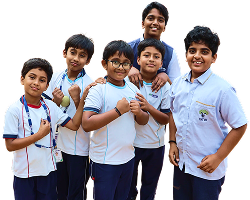
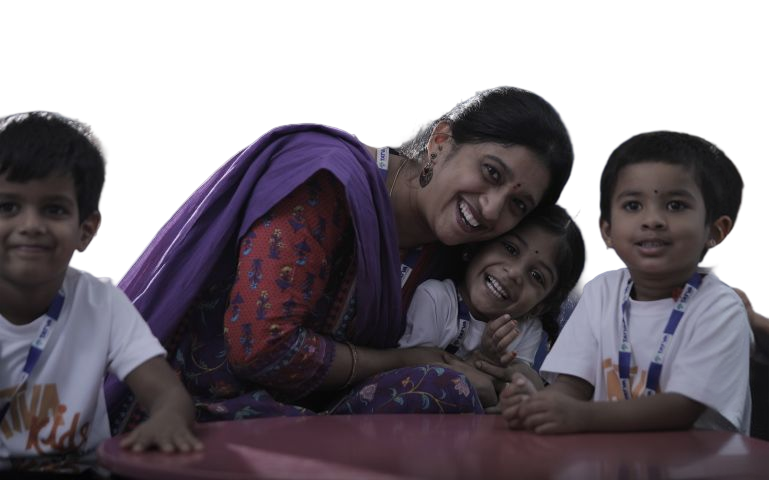
Abstract ideas, concrete confidence.

Across the sector, middle school is recognised as the stage where children first grapple with genuinely abstract ideas — in mathematics, the sciences, and how societies work — and where a school’s job shifts from delivering content to building the confidence to wrestle with it. We lean into that shift deliberately: more project work, more open-ended questions, and steadily more responsibility handed to the student for their own thinking.

Learning that leaves the classroom

This is where Beyond the Classroom really kicks in — activity-based learning where our kids participate rather than sit still, plus projects and competitions that make the syllabus feel alive.

Inquiry- and activity-based lessons as the norm.

Space to specialise and explore interests.

Guidance as the workload and stakes rise.

The step up to Secondary

By the time our students leave Secondary School, they don’t just graduate with strong results; they leave as confident thinkers, compassionate leaders, and lifelong learners, ready for whatever comes next.

(Grades 9–12 )

Secondary School

FAQ

Tatva’s middle-school stage covers Grade 6, Grade 7, and Grade 8.
To explore admissions for the Middle School stage, visit our pages for Grade 6, Grade 7, and Grade 8.

Middle school is the stage between the preparatory/primary years and secondary school. It is a period when students encounter greater academic depth while developing stronger thinking, communication, independence, and responsibility.

Look beyond the syllabus. Consider how the school develops thinking, independence, communication, problem-solving and confidence, as well as how it supports students through the transition into secondary school.

Learning becomes progressively more complex. Students are expected to understand concepts more deeply, connect ideas, apply knowledge, analyse information and explain their reasoning.

Grades 6–8 focus on developing the academic habits, thinking skills, independence and responsibility that students need as they move into Grades 9 and beyond.

Yes. Tatva Global School is affiliated with the Central Board of Secondary Education under affiliation number 130451 and is affiliated through the senior secondary level.

curious - about - tatva

Curious about Tatva? Come see it live.

Book a guided tour and experience our learning environment firsthand.

Come visit us.