Home > School Campus Visit Checklist: 10 Things Parents Should Look For
A school may look impressive on its website, in photographs, or during an admission presentation. But how can you tell what your child will actually experience every day?
A school campus visit gives you the opportunity to look beyond brochures and understand the learning environment, teaching practices, student support, safety procedures, facilities, and daily routine.
The key is knowing what to observe and which questions to ask.
This school campus visit checklist for parents covers 10 important things to look for, practical questions to ask school representatives, and a simple way to compare schools before making an admission decision.
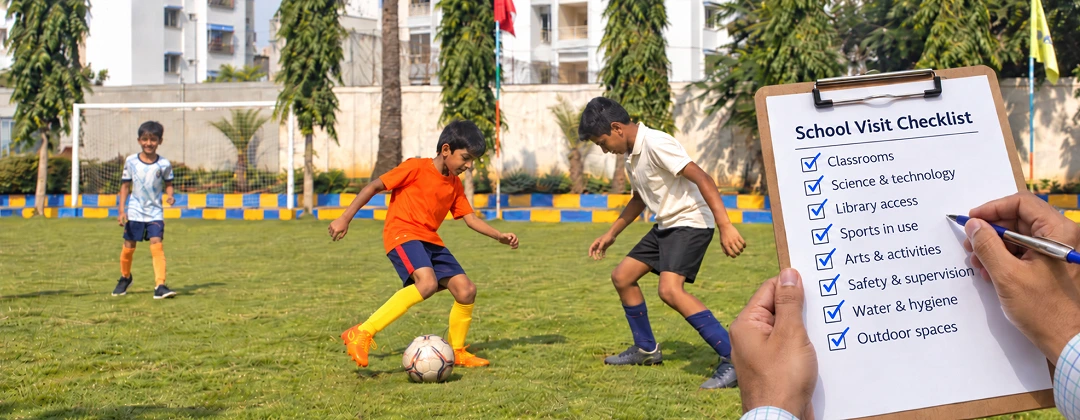
Save this checklist on your phone before visiting a school.
Use the sections below to explore each area in more detail.
A little preparation can make your campus visit much more useful.
Before visiting, consider your child’s current or upcoming grade, learning needs, interests, daily routine, and any concerns you want the school to address.
Your priorities may include:
You do not need to prepare dozens of questions. Choose five or six priorities that matter most to your family and explore them during the visit.
For example, if your child is changing schools, ask how the school identifies learning gaps and helps new students settle in. If your child is entering a higher grade, understand subject expectations, workload, and academic support.
The purpose of the visit is to understand your child’s potential everyday experience, not simply to complete a tour of the campus.
Start with the spaces your child will actually use.
A classroom does not need to look like a showroom. What matters is whether it provides a practical environment where students can learn, participate, and work comfortably.
Look for:
If possible, ask to see a classroom used by your child’s grade rather than only the most impressive classroom on the tour.
Questions to ask:
A well-equipped classroom is useful, but understanding how it supports learning is even more important.
A school’s educational philosophy may sound impressive on its website. During a campus visit, try to understand what that philosophy looks like in practice.
If you can observe a class, pay attention to how students and teachers interact.
Look for opportunities for students to ask questions, participate in discussions, practise new concepts, work independently, and collaborate with others.
A short observation cannot tell you everything about a school’s teaching approach. Use it as a starting point for a more informed conversation.
Questions to ask:
These questions help you understand the learning process rather than relying only on descriptions of teaching methods.
The way teachers and students communicate can tell you something about the school’s everyday environment.
During the visit, observe interactions where possible, including how teachers respond to questions and how students behave during breaks or transitions.
Consider:
Remember that a campus visit is only a snapshot. Avoid judging the entire school culture based on a few minutes of observation.
Questions to ask:
You are looking for a clearer understanding of how the school approaches relationships, communication, and student wellbeing.
Parents should understand what happens when a child needs additional support, not just what happens when everything is going well.
Ask how the school identifies learning difficulties, monitors progress, and communicates concerns to parents.
Find out:
You can also ask how the school supports students who are ready to progress more quickly.
Questions to ask:
A useful answer should explain the process and give a practical example, rather than simply promising individual attention.
Safety involves more than security equipment. It also depends on supervision, visitor management, emergency procedures, and how the school responds to student concerns.
During your visit, ask how students are supervised throughout a normal school day.
Check the arrangements for:
Questions to ask:
At Tatva Global School, the original school information references 196+ security cameras. Parents should confirm the current figure and ask how surveillance works alongside supervision, access control, and safety procedures.
The important question is not simply what security equipment a school has, but how students are kept safe throughout the school day.
A school may offer laboratories, libraries, sports facilities, activity rooms, technology resources, and creative spaces. However, the existence of a facility does not tell you how often your child will use it.
Instead of asking only whether a facility exists, ask how it supports students in your child’s grade.
For example:
Questions to ask:
This approach helps you understand the practical value of the facilities rather than judging the campus by the number of amenities.
A child’s school experience extends beyond academic lessons. Sports, arts, clubs, competitions, projects, and performances can provide opportunities to explore interests and develop new skills.
During your visit, ask which activities are available for your child’s grade and how frequently students can participate.
Look beyond a list of activities or photographs from annual events.
Questions to ask:
The goal is to understand what an ordinary student can realistically experience, rather than only what appears in the school’s annual highlights.
During a guided tour, it is easy to focus on impressive buildings and showcase areas. Take time to notice the spaces students use every day.
Look at:
You do not need to expect a campus to look untouched. Schools are active environments used by children every day.
Instead, look for evidence that frequently used spaces are clean, functional, and maintained consistently.
Questions to ask:
The condition of everyday spaces can help you understand how the school manages its environment beyond the formal campus tour.
Your child’s school day includes much more than classroom lessons. Students arrive, move between classes, take breaks, attend activities, use common spaces, and eventually leave campus.
If you visit while school is in session, observe these transitions where possible.
Consider how students move between spaces, how younger children are supervised, and how crowded areas are managed.
Questions to ask:
These everyday details can be difficult to understand from a website or admission presentation, but they can make a meaningful difference to your child’s experience.
Finally, think about the practical reality of attending the school every day.
Consider the complete weekday routine, including arrival time, classroom hours, breaks, activities, homework, transport, and departure time.
For families exploring schools in Hyderabad, travel from areas such as Kukatpally, Bachupally, Nizampet, Miyapur, Pragathi Nagar, or KPHB can vary depending on the route and time of day.
If possible, estimate the commute during the hours your child would actually travel.
Questions to ask:
Clarifying these details early can help you assess whether the school is a practical fit for your family as well as an educational one.
Schools often use phrases such as “individual attention,” “holistic development,” and “experiential learning.” These descriptions may reflect genuine priorities, but you need to understand what they mean in practice.
Use this table to turn broad claims into useful questions.
| If you hear... | Ask... |
|---|---|
| “We provide individual attention.” | What happens when a child starts struggling academically? |
| “We focus on holistic development.” | What does that look like during a normal school week? |
| “We use experiential learning.” | Can you share an example of a project or classroom activity? |
| “We offer excellent extracurricular activities.” | Which activities are available to my child's grade, and how often? |
| “We maintain strong parent communication.” | Who should parents contact with a concern, and what happens next? |
| “We have a safe campus.” | How are students supervised throughout the school day? |
| “We provide modern facilities.” | How frequently does my child's grade use these facilities? |
| “We support every child.” | How do you identify when a student needs additional support? |
This is not about trying to catch a school out. It is about turning general statements into information you can use to make a thoughtful decision.
When an answer is important to your family, ask for an explanation, an example, or a description of the school’s usual process.
School websites are useful for researching curriculum, admissions, facilities, programmes, and other information. A campus visit adds a different perspective.
It can help you understand:
Try to see the spaces and routines your child would actually experience rather than relying entirely on promotional photographs or a list of facilities.
If you are visiting several schools, use the same categories for each one. This makes it easier to compare what you learned without allowing one impressive feature or memorable conversation to dominate your decision.
| What to compare | School A | School B | What to verify |
|---|---|---|---|
| Classroom and teaching experience | |||
| Academic support | |||
| Student wellbeing and safety | |||
| Use of facilities | |||
| Sports and activities | |||
| Parent communication | |||
| Daily routine | |||
| Transport and commute | |||
| Total cost | |||
| Admission process |
After each visit, make three separate notes:
Record specific answers about teaching, student support, safety, facilities, fees, and admissions.
Write down what you personally saw, such as classroom organisation, teacher-student interactions, student movement, and campus maintenance.
List unanswered questions about transport, additional fees, facility access, academic support, or admission requirements.
Keeping these categories separate helps you distinguish information provided by the school from your own observations and the points that still need clarification.
You do not need to turn school selection into a mathematical exercise. The aim is to compare schools consistently and identify which environment best matches your child’s needs.
Before you leave, make sure you have a reasonably clear answer to these questions:
A successful campus visit should leave you with fewer assumptions, clearer answers, and a better understanding of your child’s potential everyday experience.
Parents should assess classrooms, teaching and learning, teacher-student interactions, academic support, safety, facilities, activities, cleanliness, daily routines, transport, and admission details. Focus on what your child will actually experience rather than the appearance of the campus alone.
Ask about a typical school day, teaching methods, assessment, support for students who struggle, safety procedures, facility usage, extracurricular activities, parent communication, fees, and transport arrangements.
A campus visit can help you understand the learning environment and clarify questions that may not be answered online. It is useful to combine the visit with research into the curriculum, teaching approach, fees, admission requirements, and your child's needs.
Look for an age-appropriate layout, a comfortable learning environment, accessible learning materials, student work, and opportunities for participation. If possible, ask to see a classroom used by your child's grade and learn what a typical lesson involves.
Ask how students are supervised during lessons, breaks, transitions, and arrival or dispersal. Understand visitor management, emergency procedures, medical assistance, and the school's approach to bullying and student conflicts.
Use the same checklist for each school. Record what you were told, what you observed, and what still needs verification. Compare teaching, academic support, safety, facilities, activities, communication, commute, fees, and admissions.
A visit provides valuable information, but it is only one part of the decision. Consider it alongside your research into curriculum, teaching, student support, fees, transport, and the factors that matter specifically to your child.
You can learn a lot about a school online. But visiting the campus gives you the opportunity to see the learning environment, ask questions, and understand how the school works in practice.
If Tatva Global School is on your shortlist, use your visit to explore the spaces relevant to your child’s grade and ask about teaching and learning, assessment, student support, campus life, safety, parent communication, fees, and admissions.
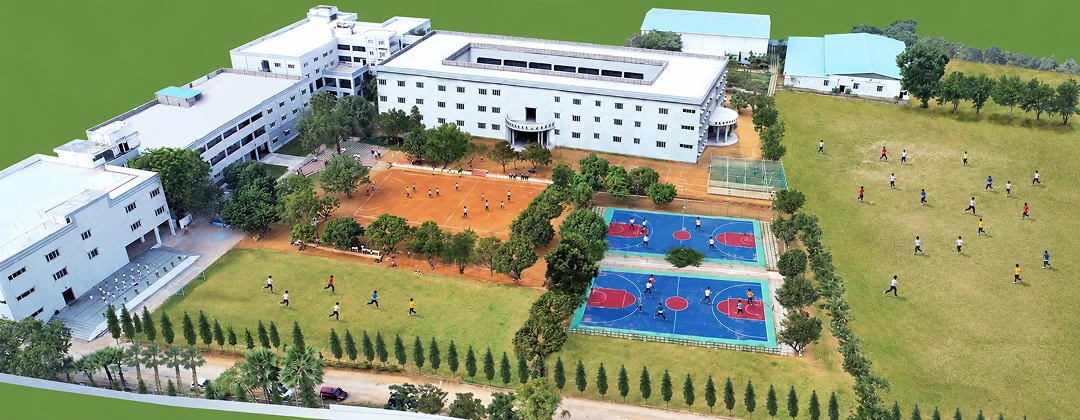
Tatva’s existing school information describes an 11-acre campus serving students across K–12. Confirm the current campus and programme details with the school before your visit.
Bring this checklist, ask the questions that matter to your family, and take the time to understand what a normal school day could look like for your child.
Discover the learning environment, get your questions answered, and make a more informed decision about your child’s education.
Admissions for 2026–27 are open.
We’ll hold the door.