Home > Why Tatva Global School? What Makes Our Approach Different
Choosing a school is one of those decisions that stays with parents long after the admission form is submitted. You are not simply choosing where your child will spend the next few years. You are choosing the people who will influence your child’s thinking, the environment in which your child will discover his or her abilities, and the experiences that will shape how they understand themselves and the world around them.
Academic results matter. So do teachers, facilities, safety, and opportunities beyond the classroom. But there is another question worth asking: What kind of person is this school helping my child become?
At Tatva Global School, our educational philosophy is built around this broader understanding of education. We believe children need opportunities to develop their thinking, follow their curiosity, practise compassion and build character. These qualities matter not only during school years but also in the choices they make, the relationships they form, and the contributions they eventually make to society.
If you are considering Tatva Global School, here is a closer look at the philosophy behind our approach, the learning experiences parents should explore, and the factors that can help you decide whether our school is right for your child.
Discover how our approach to education can shape your child’s learning journey. Connect with our admissions team to explore the school, understand the admission process, and find the right fit for your child.
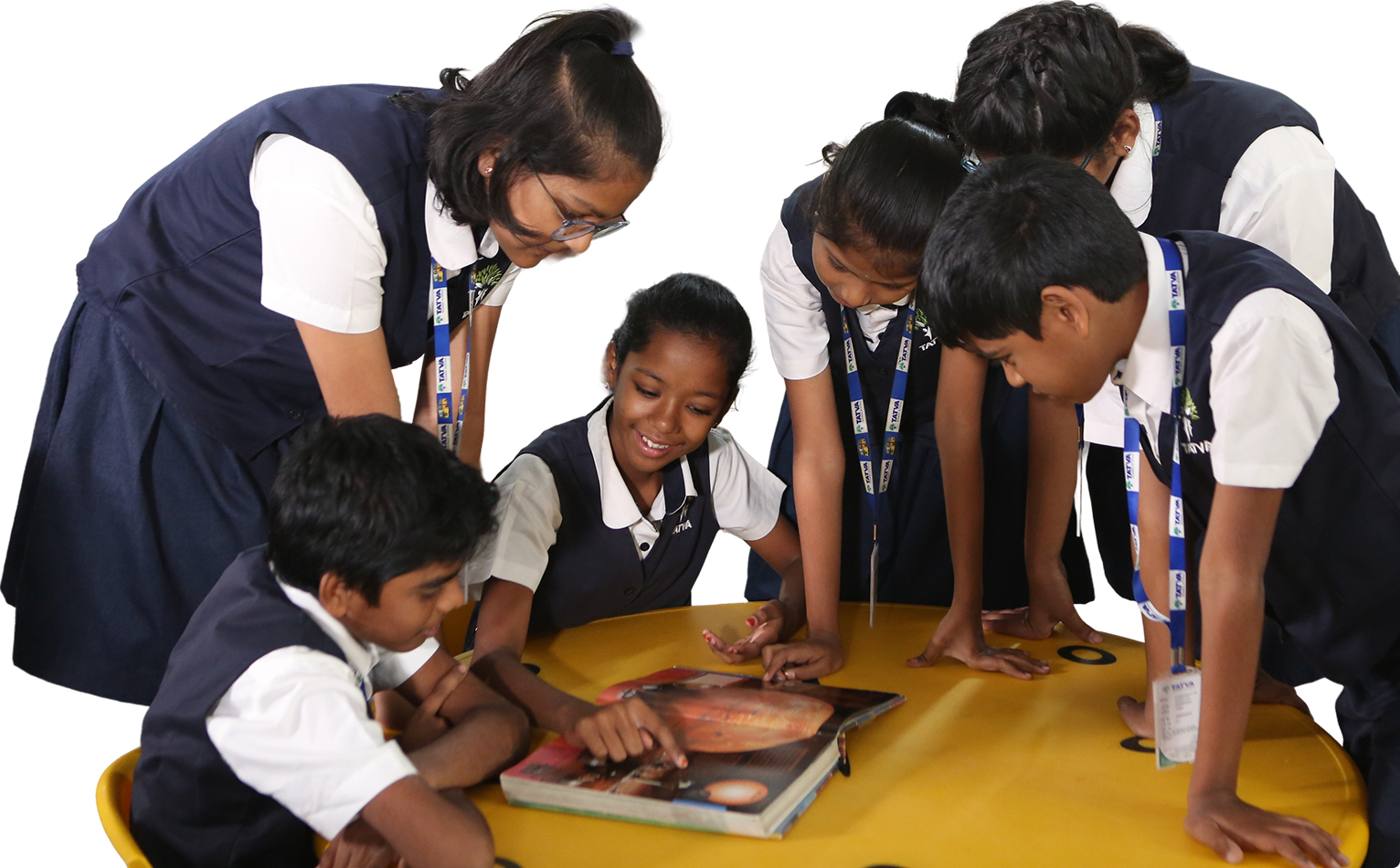
Every child enters school with a different combination of interests, abilities, questions, and experiences. Some are eager to speak up in class. Others prefer to observe before participating. One child might enjoy solving a difficult problem, while another finds confidence through music, sport, art, or working with classmates.
A meaningful education makes room for these differences while helping every child continue to grow.
At Tatva Global School, we look at education as more than the completion of a syllabus. Academic learning provides children with essential knowledge and skills, but the experience of learning also shapes how they approach challenges, respond to other people, and make decisions.
A child should have opportunities to ask questions without feeling embarrassed, learn from mistakes without losing confidence, and understand that being successful involves more than being the highest scorer in a class.
This does not make academic achievement less important. It places achievement within a larger purpose.
When parents ask why they should choose Tatva Global School, we believe the conversation should begin here: with the kind of learning environment they want for their child and the qualities they hope their child will develop over time.
A school’s identity is not defined by a slogan alone. It becomes meaningful when its educational philosophy shapes everyday teaching, classroom interactions, student relationships, and how children are encouraged to approach the world.
Tatva’s educational philosophy centres on four qualities: Cognition, Curiosity, Compassion, and Character. Together, these Four Cs provide a framework for thinking about a child’s development beyond academic performance.
Cognition is about developing the ability to think, understand, analyse, and make connections. Children need more than the ability to remember information. They need opportunities to interpret what they learn, recognise patterns, consider different possibilities, and apply their understanding to unfamiliar situations.
Curiosity begins with the willingness to ask questions. Why does something happen? Is there another way to solve this problem? What can we learn from a different perspective? When children are encouraged to investigate such questions, learning becomes something they actively participate in rather than simply receive.
Compassion involves recognising that other people have feelings, needs and experiences of their own. Children can develop this understanding through listening, cooperating, resolving disagreements and learning to consider perspectives different from their own.
Character becomes visible in the choices children make. It includes being honest when the truth is difficult, taking responsibility for mistakes, treating others respectfully, and following through on commitments.
These qualities are connected. Curiosity can lead a child to explore an unfamiliar idea. Cognition helps them understand it. Compassion encourages them to consider how their actions affect others, while character influences what they choose to do with what they have learned.
The Four Cs are not simply four separate outcomes. They represent a broader view of what education can help a child develop.
The world children will grow into is connected in ways that can be difficult to imagine during their school years. They will encounter different cultures, perspectives, technologies, and challenges. They will need to work with people whose experiences may be very different from their own.
Preparing children for this world involves more than introducing them to global issues. It means helping them develop the confidence to participate, the curiosity to understand unfamiliar perspectives and the compassion to recognise their responsibilities towards others.
Tatva’s Global Citizen approach reflects this broader purpose.
Being a global citizen does not mean that a child must have an answer to every international issue or understand every culture. It begins with smaller, everyday habits: listening before judging, respecting differences, asking thoughtful questions, and understanding that individual choices can affect a wider community.
The ultimate aim is contribution. Knowledge and ability become more meaningful when children can use them constructively, whether that means helping a classmate, participating responsibly in their community, or eventually applying their skills to a larger challenge.
Children learn values partly through what adults explain, but also through what they experience repeatedly.
A lesson about honesty becomes more meaningful when a child is encouraged to tell the truth after making a mistake. Cooperation becomes easier to understand when children have to work together towards a shared goal. Responsibility develops when they are expected to recognise their part in a situation and make an effort to put things right.
Tatva’s eleven core values: courtesy, helpfulness, obedience, cooperation, responsibility, simplicity, patriotism, respect, acceptance, patience and honesty.
Each value offers a practical starting point for conversations and experiences at school.
Courtesy influences how children speak to others. Helpfulness encourages them to notice when someone needs support. Cooperation teaches them that working together sometimes requires compromise. Responsibility helps them understand that their actions have consequences.
Respect and acceptance encourage children to treat people with dignity, including those whose opinions, abilities, or backgrounds differ from their own. Patience reminds them that progress takes time. Honesty supports trust, while simplicity encourages them to recognise what matters without making unnecessary distinctions.
These values become most useful when children can connect them with real situations. Parents visiting Tatva can ask how such values are introduced, discussed, and reinforced in everyday school life.
Academic qualifications can open doors, but what children eventually do with their knowledge matters too.
Contribution is the outcome towards which Tatva’s educational philosophy points. It connects thinking, curiosity, compassion, and character with a child’s ability to participate meaningfully in the world.
For a younger student, contribution might begin with sharing materials, helping a classmate, or taking responsibility for a small task. As children grow, it may involve collaborating on projects, considering the consequences of a decision, or using their knowledge to address a problem.
The scale changes as children mature, but the underlying idea remains: education should help children become capable of contributing, not simply competing.
A school’s educational philosophy matters most when it influences how children learn. Parents should therefore look beyond descriptions of teaching methods and understand what those methods mean for students in practice.
Children often understand an idea more deeply when they have an opportunity to explore it, test it, or connect it with something they already know.
Inquiry-based learning starts with questions and investigation. Instead of treating every topic as information to memorise, it encourages children to examine evidence, consider explanations, and develop their understanding.
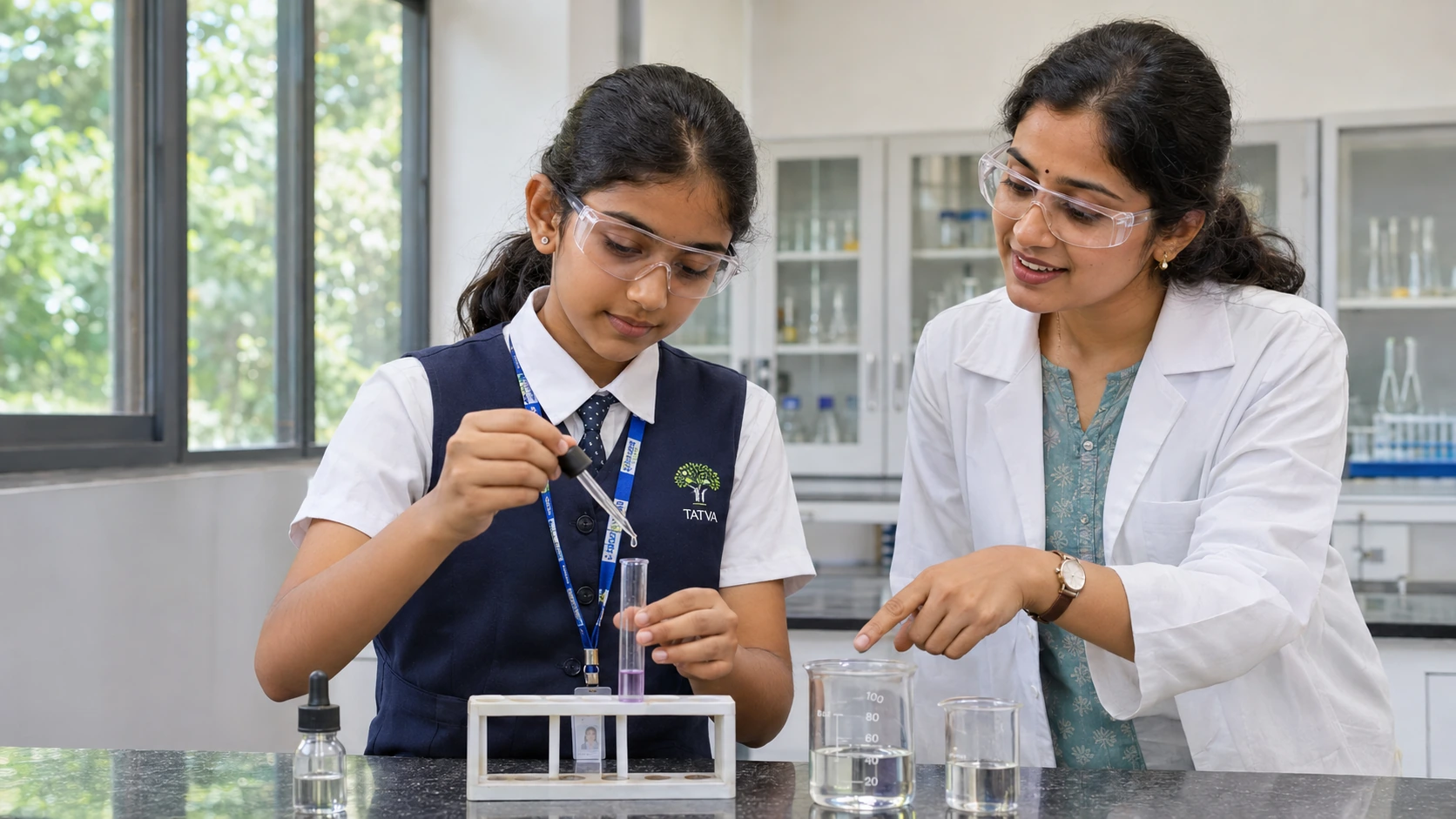
Activity-based learning gives students opportunities to engage with concepts through activities and practical experiences. Depending on the subject and age group, this may involve experiments, discussions, demonstrations, collaborative tasks, or hands-on exercises.
Neither approach removes the need for clear explanations, practice, or structured instruction. Children need all of these. The value lies in creating opportunities to move from hearing about an idea to understanding how it works.
Parents can ask to see examples of classroom activities and student work to understand how these approaches are used at different grade levels.
Children do not all learn at the same pace. Some grasp a new concept quickly but need more practice applying it. Others understand an idea when it is explained differently or connected to a practical example.
Supporting individual learning needs begins with recognising these differences.
Small-group activities, opportunities to ask questions, targeted feedback and additional explanations can help teachers identify where a student needs support. The specific methods used may vary by subject, grade and learning objective.
Parents should ask how Tatva identifies learning gaps, communicates progress, and provides support when a child is struggling with a concept.
The important question is not whether every child will find every subject easy. It is whether difficulties can be identified early and addressed constructively.
Marks provide useful information, but they cannot explain everything about a child’s learning.
A test can show whether a student understands particular concepts under specific conditions. Classwork, projects, classroom participation, and teacher feedback can provide additional insight into how that understanding develops.
Looking at progress over time helps parents and teachers ask more useful questions. Has the child understood a difficult concept? Can they apply it independently? Are they becoming more confident about explaining their reasoning? Where would further practice help?
Formal assessments remain important, particularly as students progress through school. The goal is to understand results in context and use feedback to guide improvement.
Parents considering Tatva Global School should ask how assessment works in their child’s prospective grade, how feedback is shared, and how teachers help students respond to areas that need improvement.
A child who needs additional help should not be defined by the difficulty they are experiencing.
Sometimes a student needs more time to understand a concept. Sometimes a gap in foundational knowledge makes a new topic harder to follow. In other situations, a child may understand the material but need more practice applying it independently.
Effective academic support begins by identifying the difficulty rather than assuming that every student needs the same intervention.
Tatva Global School’s Remedial After-School (RAS) programme is a point parents can explore when discussing additional academic support. Ask the school about the programme’s current availability, eligibility, schedule, subjects covered, and how progress is monitored.
Understanding these details can help families determine what support is available and how it may meet their child’s needs.
The needs of a five-year-old are different from those of a student preparing for senior secondary examinations.
In the early years, children are building foundational skills, learning to participate in a classroom and developing confidence in unfamiliar situations. Primary school introduces more structured academic learning while continuing to develop curiosity and independence.
As students enter middle school, subjects become more demanding. They need to organise their work, make connections across topics, explain their reasoning, and manage greater responsibility.
Secondary, and senior secondary education brings its own demands, including deeper subject knowledge, examination preparation, and decisions about future study.
A connected Nursery-to-Grade 12 learning journey should recognise these changes rather than treating every stage as an extension of the previous one. Parents can ask how Tatva Global School adapts learning expectations and student support as children move between stages.
Children spend a significant part of their formative years at school. Their experiences there can influence how they communicate, manage setbacks, build relationships, and understand their responsibilities.
This is why opportunities beyond formal academic lessons matter.
Character is not developed through a single lesson or assembly. It grows through repeated choices and the guidance children receive when those choices are difficult.
A student may need encouragement to acknowledge a mistake, patience when a group task does not go as planned, or support in resolving a disagreement fairly.
These situations provide opportunities to practise responsibility, honesty and cooperation. They also help children understand that making a mistake is not the end of learning; recognising it and responding constructively are important parts of growth.
Working with others is rarely as simple as dividing a task and completing it. Children have to listen, negotiate, share responsibilities and sometimes reconsider their own ideas.
Group activities can help students practise these skills. So can everyday classroom interactions, opportunities to help others and discussions about the consequences of their decisions.
Over time, children can learn that cooperation does not mean agreeing with everyone. It means working respectfully towards a shared purpose, even when people bring different ideas to the task.
Confidence is not the same as always being comfortable or having the quickest answer.
For some children, confidence begins with asking a question in class. For others, it means explaining an idea, presenting their work or being willing to try again after an unsuccessful attempt.
Opportunities to speak, listen, create, collaborate and solve problems can help children become more comfortable expressing themselves.
Independent thinking also develops when students are encouraged to explain why they hold an opinion, consider evidence and listen to alternative viewpoints.
Children have different interests, and not every strength appears in an examination result.
Sports and athletics can provide opportunities to practise discipline, teamwork and perseverance. Art and creative activities can help children explore ideas and express themselves in different ways. Clubs, performances and collaborative projects can offer other opportunities to discover interests and develop new skills.
Parents should explore the current activities available at Tatva Global School, how students can participate, and whether opportunities vary by grade.
The objective is not to expect every child to excel at everything. It is to help children discover what interests them while encouraging them to try experiences that may be new to them.
The physical environment of a school influences what children can do, where they can explore, and how they experience their day.
Tatva Global School has an 11-acre campus in Gajularamaram, Kukatpally, Hyderabad. Beyond the size of the campus, parents should consider how its spaces and facilities support learning, recreation, and everyday student life.
Libraries can help children develop reading habits, explore interests, and access information beyond their textbooks. Science laboratories can support practical investigation, while mathematics and computer resources can create opportunities to apply concepts and develop technical skills.
Skill and media labs may offer additional learning opportunities, depending on the activities and resources available to students.
When visiting the campus, ask which facilities are available to your child’s grade, how frequently students use them, and what kinds of learning activities take place there.
A facility becomes educationally valuable when children have meaningful opportunities to use it.
Physical activity can support coordination, fitness, teamwork and confidence. Sports also give children opportunities to practise persistence, follow shared rules and respond to both success and disappointment.
Parents should explore the sports facilities and activities currently available at Tatva, including the opportunities students have to participate across different age groups.
Parents need to know that their child’s daily experience is supported by appropriate safety and wellbeing measures.
Tatva’s campus safety information, including the presence of more than 196 monitored CCTV cameras, is one aspect families can ask about during a visit. Camera coverage alone does not establish how comprehensive a school’s safety arrangements are, so parents should also understand supervision practices, visitor procedures, emergency preparedness, and the way concerns are reported and addressed.
For families considering school transport, useful questions include how routes and student handovers are managed, what communication is available to parents, and what procedures apply if a child or parent raises a concern.
Parents may also want to understand the school’s arrangements for health support, dining and nutrition. These everyday details contribute to a child’s experience just as much as the facilities highlighted in a campus brochure.
For more practical guidance, explore our school facilities checklist to know what to look for when evaluating a school’s campus and facilities before making an admission decision.
Facilities and educational frameworks matter, but children experience school through the people they interact with every day.
Teachers explain concepts, notice when students need help, provide feedback, and help children navigate classroom relationships. Their ability to communicate clearly and respond thoughtfully can make a significant difference to a student’s experience.
School leadership also plays an important role. It helps establish expectations, guide educational priorities, and create consistency between the school’s stated philosophy and its everyday practices.
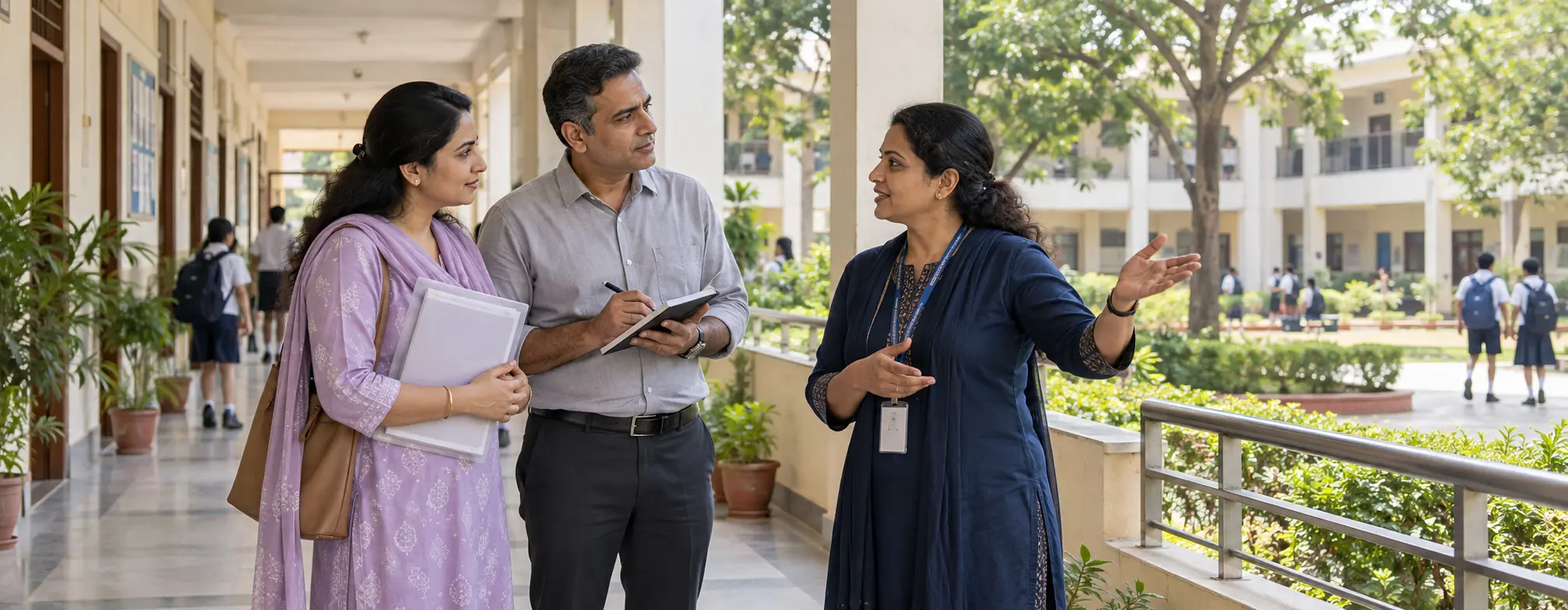
Parents are an essential part of this relationship. They bring an understanding of their child’s interests, concerns, routines, and experiences outside school. When communication between families and teachers is constructive, it becomes easier to identify changes, celebrate progress, and address difficulties before they become more complicated.
When evaluating Tatva Global School, parents should consider how teachers communicate with families, how concerns are handled, and how the school works with parents to support students.
A school’s philosophy is easiest to understand when you can see how it influences real experiences.
If Cognition is important, ask how students are encouraged to explain their reasoning rather than simply provide answers.
If Curiosity is a priority, look for opportunities to investigate questions, explore ideas, and learn through practical experiences.
If Compassion and Character are central to the school’s approach, ask how students are guided through disagreements, encouraged to take responsibility, and taught to treat others respectfully.
You can also ask to see examples of student projects, classroom activities, and age-appropriate learning experiences. Where the school shares parent testimonials or student achievements, consider the context behind them rather than relying on a statement or photograph alone.
These conversations help turn an educational philosophy into something parents can evaluate.
They also make it easier to distinguish between what a school says it values and what families can observe in practice.
To help you make a well-informed choice, read our guides on the best CBSE schools in Hyderabad and choosing the right school for your child.
There is no single school that is automatically the right choice for every child. Families have different priorities, and children have different needs.
Before making a decision, consider the following questions:
The answers should come from more than a website. Read our school’s information, speak with our representatives and, where possible, visit our campus to understand the environment for yourself.
Tatva Global School is located in Gajularamaram, Kukatpally, Hyderabad, making its location relevant for families exploring schools around areas such as Bachupally, Nizampet, Miyapur, KPHB, Pragathi Nagar, Quthbullapur. Whether the commute works for your family will depend on your specific starting point, route, and daily schedule.
If you are considering Tatva Global School for your child, the next step is to understand the school beyond its descriptions.
A campus visit allows you to ask questions about the educational philosophy, teaching practices, facilities, student support, and school routines. You can also clarify grade availability, the admissions process, and the details relevant to your child’s prospective entry year.
Prepare a few questions to ask before choosing a school. Ask what a typical school day looks like, how teachers help students who need additional support, how the Four Cs inform everyday learning, and how parents receive updates about their child’s progress.
You do not need to make a decision based on a single conversation. Take the time to compare what matters to your family and consider whether the school’s approach feels right for your child.
The best way to understand a school is to experience it. Visit Tatva Global School, explore our 11-acre campus, meet our team, and discover how we can support your child’s learning and growth. Take the first step towards admissions for 2027–28.
Parents considering Tatva Global School can explore its educational philosophy, Four Cs framework, Global Citizen approach, core values, teaching practices, student development opportunities, and campus facilities. The best way to assess whether it is the right fit is to understand how these elements are put into practice and how they align with your child's needs.
The Four Cs are Cognition, Curiosity, Compassion, and Character. Together, they represent an approach to education that values thinking, exploration, consideration for others, and responsible choices. Contribution is the broader outcome towards which these qualities are directed.
Tatva's Global Citizen approach focuses on developing responsible, confident, and compassionate individuals. Parents can explore how the school encourages students to understand different perspectives, cooperate with others, take responsibility, and consider how their actions affect the wider community.
Tatva identifies eleven core values: courtesy, helpfulness, obedience, cooperation, responsibility, simplicity, patriotism, respect, acceptance, patience, and honesty. Parents can ask how these values are incorporated into everyday school experiences and interactions.
The school's educational approach includes inquiry-based and activity-based learning. Parents should ask how these methods are used in their child's prospective grade, how formal instruction and practical activities are balanced, and how teachers respond to different learning needs.
Parents can enquire about the school's current academic support arrangements, including the Remedial After-School (RAS) programme where applicable. It is useful to understand eligibility, availability, the subjects covered, and how student progress is monitored.
Tatva has an 11-acre campus in Gajularamaram, Kukatpally, Hyderabad. Parents can enquire about the current availability and use of its libraries, laboratories, sports facilities and other learning resources, along with campus safety, transport and student wellbeing arrangements.
You can contact the school to enquire about arranging a campus visit. Use the visit to ask about the educational approach, grade availability, facilities, student support, and admissions requirements relevant to your child.
Admissions for 2026–27 are open.
We’ll hold the door.